

















































































Course Description
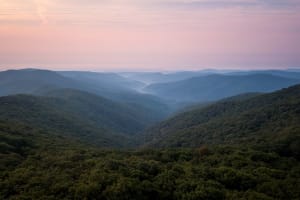
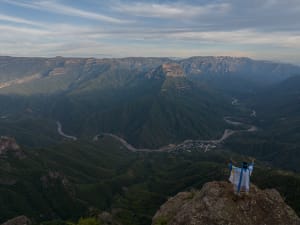
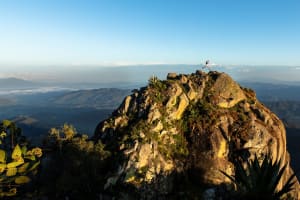
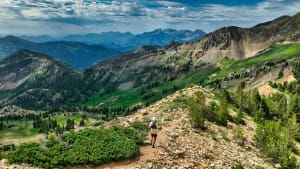
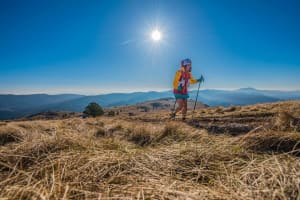
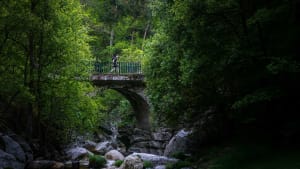
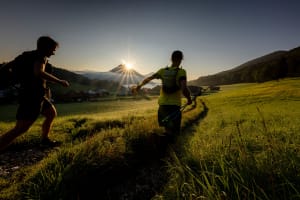
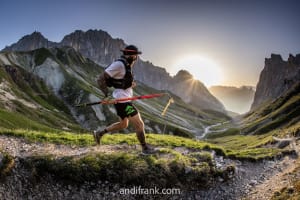
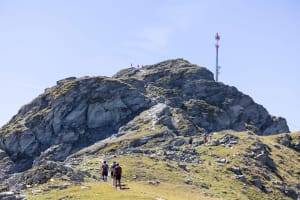
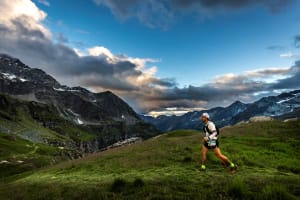
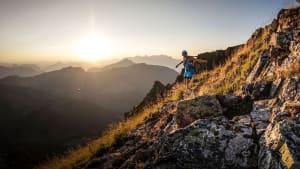
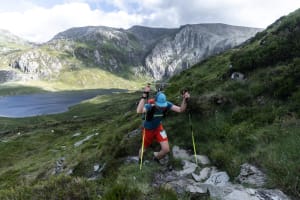
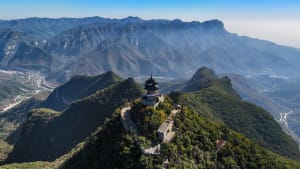
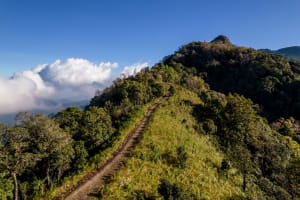
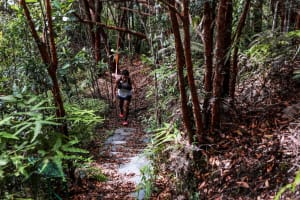
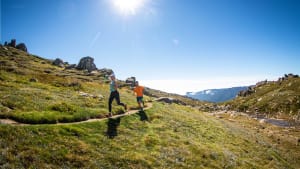
A compact but demanding trail race. Old Capital Trail starts in front of the historic Nizwa Fort and souq and finishes in Birkat Al Mouz. The course opens with a steady climb, quickly leaving the city behind and revealing panoramic views over Nizwa. Runners move onto technical mountain trails with rocky surfaces and narrow single-track requiring precise footwork. A second sustained ascent adds to the physical challenge before the route turns toward the finish. The final section descends toward Birkat Al Mouz, demanding controlled downhill running. Short in distance but challenging, with approximately 1,400 m of elevation gain, Old Capital Trail delivers a focused and rewarding test of trail running.

| BASE KIT | |
| Running Pack | MANDATORY - To carry mandatory kit throughout the race |
| Smartphone | MANDATORY - LiveTrail application must be installed and activated with international roaming allowing for its use in Oman. Must be reachable at any time before, during and after the race. Keep the phone on, airplane mode is forbidden and could give rise to penalties. An external battery is highly recommended. |
| Water Supply | MANDATORY - Minimum 1 Litre |
| Trail Running Shoes | MANDATORY - Sturdy, closed trail running shoes |
| First Aid Kit | MANDATORY - Minimum of cohesive bandage (i.e. vet wrap), supplies to manage blisters and small wounds |
| Survival Blanket | MANDATORY - 1.40m x 2m minimum |
| Whistle | MANDATORY |
| Food Reserve | MANDATORY - Recommendation: 800kcal (2 gels + 2 power bars each of 65g) |
| Waterproof Jacket with Hood | MANDATORY - For bad weather in the mountains. Must be made of waterproof (minimum 10,000 Schmerber) and breathable (RET inferior to 13) membrane. Must have integrated hood or attached hood, sealed seams. Air vents are accepted. Race director's opinion prevails during checks. |
| Cap/Bandana/Buff® | Recommended |
| Personal Cup (Beaker) | MANDATORY - Minimum 150ml (15cl). Bottles or flasks with lids are not accepted |
| ID Document | MANDATORY - Passport or ID card |
| GPS Watch | Recommended |
| Trekking Poles | Recommended |
| Cash | Recommended - At least 10 OMR (just in case...) |
| Spare Clothes | Recommended |
| HOT WEATHER KIT | |
| Sunscreen | MANDATORY - Recommendation: minimum SPF 50 |
| Sunglasses | MANDATORY |
| Saharan Cap | MANDATORY - Or any combination which completely covers the head and nape of the neck |
| Minimum Water Supply | MANDATORY - 2 Litres |
| BAD WEATHER KIT | |
| Waterproof Jacket with Hood | MANDATORY |
| Long-Legged Trousers/Leggings | Recommended |
| Waterproof Overpants | Recommended |
| Additional Warm Second Layer | Recommended |
| Spare Warm Clothing | Recommended |
With your participation in this race you will collect one Running Stones which will give you extra chances to be selected for the UTMB World Series Finals.
Race packs and bibs will be issued on 5–6 December 2026 in Muscat, and on 8–11 December 2026 at the Race Village in Birkat Al Mouz. Collection will be open from 10:00 AM to 10:00 PM at both locations.
Bib collection is mandatory and must be completed in person. All mandatory equipment will be checked to ensure compliance with race safety standards.
RUNNER’S COMMITMENT
To participate in a UTMB event, in particular it is essential:
To be completely aware of the length and difficulty of the event and to be adequately prepared for it.
To have acquired, before to the race, a real understanding of personal autonomy in the mountains/terrain allowing for the management of potential problems encountered during this type of event, notably:
Ability to confront, without outside assistance, changing climatic conditions which could be very difficult to deal with at altitude (night, wind, cold, fog, rain or snow). Ability to manage, including when one is isolated, physical or mental problems arising from a heavy fatigue, digestive problems, muscle or articular/joint pains, small wounds, etc... Aware that the organization’s role is not to help a runner manage these problems. Aware that for such an activity in the mountains, safety depends upon the runner's ability to adapt to the problems encountered or foreseen. To inform and educate the runner’s supporters towards the respect of nature, people, and the regulations of the race.
SEMI-AUTONOMY / SELF-SUFFICIENCY
Participants are expected to demonstrate the principles of semi-autonomy/self-sufficiency. They should be prepared to carry their own fluids, food, and gear (including inclement weather gear) between aid stations. Participants should also be prepared, within the course safety guidelines, to handle adverse or changing conditions. This self-sufficiency principle implies the following rules:
Throughout the duration of the race each runner must have with them all their mandatory equipment. This equipment will be carried in a pack (backpack or belt) and cannot be changed along the race route. At any moment of the race, the race stewards/marshals can verify the pack and its contents. The runner is obligated to comply with these gear checks. Any non-compliant runner is at the risk of disqualification from the race. The aid stations provide drinks and food to be consumed on site. The race organizer only provides still water and/or sports/electrolyte drink for filling water bottles or hydration packs. The runner should take care to ensure they have, when leaving each aid station, the appropriate quantity of drink and food to keep them going until the following aid station. For races of the 100M, 100K and 50K, a personal assistant is allowed at certain aid stations (*), in the area specifically reserved for this use and at the discretion of the team leader. Only one person is allowed to provide assistance, which only includes providing the runner a bag with a maximum volume of 30 liters. Medical assistance given by a member of the runner’s crew, is strictly forbidden, only small cares are allowed like massage and treating a blister as long as the runner remain seated on a chair and does have to lie. The rest of the aid station is strictly reserved for the runners. It is forbidden to accompany or be accompanied along any part the race route by a person not registered for the race, outside of the spectator run zones which are clearly marked in the proximity of the aid stations. A participant who accepts being accompanied outside of the designated zones violates the principle of self-sufficiency. The assistance zone begins 500m before and ends 500m after the aid station, and there is only one assistant allowed per runner. The race stewards/marshals or team leaders, witnessing this violation, are authorized to penalize the participant in order to enforce the rules. Runners are not allowed to participate with a dog or any other animal, including service animals.
DROP BAGS / SPARE BAGS
At the race-pack collection, each participant receives at least a 30-liter bag. After filling the bag with the items of their choice and closing them, runners can drop them off at the dedicated event area.
For logistics reasons, UTMB World series events only accept the UTMB World series spare bags that are distributed during the check-In. Those bags are reusable, so we ask the runners who already have received one of those bags to reuse it each time they take part in a UTMB World Series event.
The bags are returned to either the runner or a family member or friend, only upon presentation of the race-bib. The bags must be retrieved no later than 2 hours after the end of the race. For any runner that drops out of the race, the organization will take the bags to the finish area, as long as the runner’s withdrawal is registered with the race organizer. Because of logistical factors, the organization cannot guarantee that all bags are brought before the end of the race.
Only bags supplied by the organization will be transported. Poles are not allowed in these bags. As the items in the bags are neither checked nor controlled, the race organizer is not responsible for the items in the bags. We recommend not to put any valuable items in the bags. We advise runners to keep toiletries and spare clothes at their accommodation.
Every finisher has a chance to be recognized. Awards are presented across Overall and Age Category rankings, with separate recognition for men and women.
For the Old Capital Trail 20K, cash prizes are also awarded to the top three men and top three women in the Overall categories.
🏆 Overall Ranking
Cash prizes are awarded to:
- 🥇 1st Place: OMR 300 (€ 720)
- 🥈 2nd Place: OMR 250 (€ 600)
- 🥉 3rd Place: OMR 200 (€ 480)
🏅 Age Categories
The 1st-place male and 1st-place female runner in each age category will receive a trophy.
- 18–19
- 20–34
- 35–39
- 40–44
- 45–49
- 50–54
- 55–59
- 60–64
- 65–69
- 70–74
- 75–79
- 80–84
- 85+
Moments Along Oman’s Heritage Trails
You Will Be Running Through:
- Narrow canyon walls and hidden falaj lines
- Date palms near canyon floors
- Still air, trapped heat, rising effort
- Goats above, voices below
- Silence returning as altitude takes over
Getting to the start line in Nizwa
The race will start in Nizwa, a historic city located within easy driving distance of the Race Village in Birkat Al Mouz. Dedicated event transport and shuttle services will be provided to support runners travelling to the start area, particularly for those without personal vehicles. Navigate to the location by clicking here.


